
Emerald Ash Borer Found Closer to Sherwood: What Residents Should Know
June 18, 2026The Emerald Ash Borer (EAB), an invasive beetle that attacks and kills ash trees, has recently been confirmed in King City. While no infestations have been identified in Sherwood at this time, this finding brings the known infestation area significantly closer to our community and serves as a reminder that preparation is important.
EAB was first discovered in Oregon in 2022 near Forest Grove, marking the first detection of the pest on the West Coast. Since then, additional infestations have been found in several locations across northwest Oregon. State and local agencies continue to monitor and manage the spread through trapping, surveys, and other proactive measures.
What Is the Emerald Ash Borer?
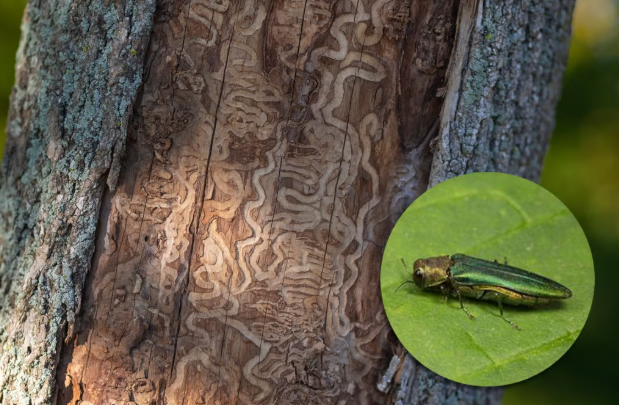
The Emerald Ash Borer is a small, metallic green beetle that infests ash trees. Larvae feed beneath the bark, disrupting the tree’s ability to move water and nutrients. Once a tree becomes infested, it typically dies within three to seven years.
While EAB cannot be eradicated once established in an area, communities can slow its spread and protect valuable trees through early detection and proper management.
What Residents Can Do Now
The good news is that there are several practical steps residents can take to help protect ash trees and prepare for the eventual arrival of EAB.
Keep Ash Trees Healthy
EAB is often attracted to stressed trees. If you have ash trees on your property:
- Water trees during dry summer months.
- Apply mulch around the base of the tree to help retain soil moisture.
- Avoid unnecessary pruning, especially between April and October when adult beetles are most active.
- Consult a certified arborist if your tree requires pruning or if you have concerns about its health.
Learn the Signs
Often, homeowners notice signs of tree stress before they see the beetles themselves. Common symptoms include:
- Thinning or dieback in the upper canopy
- New shoots growing from the trunk or base of the tree
- Cracks or separation in the bark
- Light-colored patches where woodpeckers have removed bark while feeding
- Small D-shaped exit holes approximately 1/8 inch wide
Adult beetles are metallic green and typically active from June through August.
Consider Preventative Treatment
For healthy ash trees larger than six inches in diameter, preventative insecticide treatments may be an option. When applied by a licensed professional, treatments can be highly effective and may help protect trees for years.
Property owners interested in preserving mature ash trees should consider consulting with a certified arborist to discuss treatment options before signs of infestation appear.
Don’t Move Firewood
One of the primary ways EAB spreads long distances is through the movement of infested firewood and wood products.
Residents are encouraged to:
- Buy firewood locally.
- Use firewood where it was purchased.
- Avoid transporting firewood between communities.
Report Suspected Sightings
Early detection helps agencies better understand where EAB is spreading. Residents who believe they have identified signs of EAB can report observations through the Oregon Invasive Species Online Hotline.
Staying Ahead of the Problem
The recent detection in King City provides an opportunity fordthe community to become informed and prepared.
By learning how to identify EAB, maintaining healthy trees, and taking proactive steps today, Sherwood can help slow the spread of this invasive pest and preserve valuable ash trees for years to come.
Additional information, identification resources, and reporting tools can be found via the links below.
Oregon Department of Agriculture: emerald ash borer
Emerald ash borer outreach and awareness


 Welcome to the City of Sherwood’s Notification System, the city’s latest tool for providing residents with immediate information and warnings on water contamination, extreme weather warnings, unexpected road closures, etc. This is a free service provided by the City of Sherwood.